About Anna

I lived the pattern before I learned to work with it.

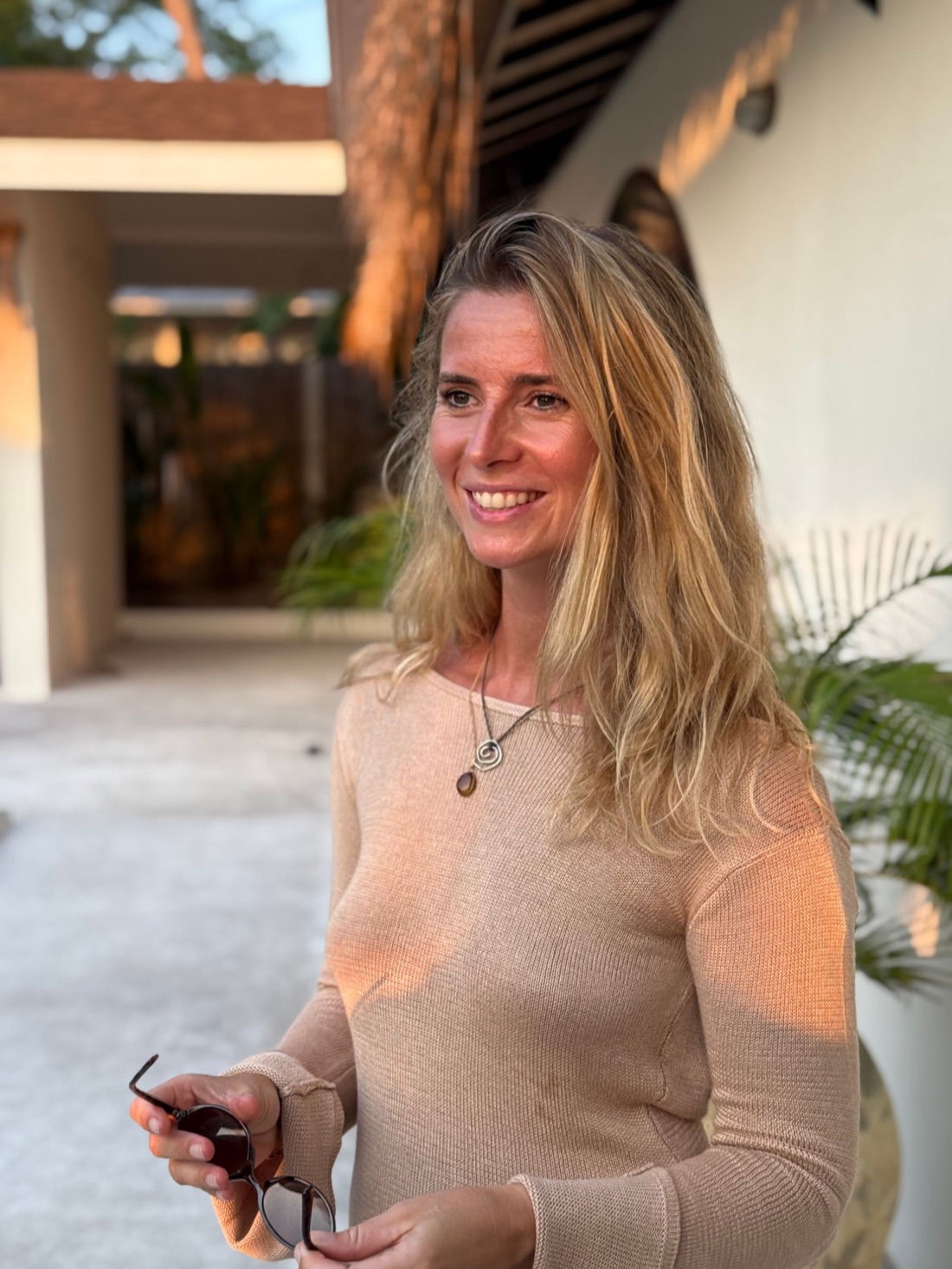
Anna Cluytens, outside in warm evening light

Before every dinner I used to rehearse the conversation in my head. Who I would talk to, what I would say, how I could be interesting enough for people to like me. Even festivals made me nervous, and I would push my tiredness away and go anyway with a mask on, or stay home because being judged felt worse.

What I believed

For a long time I thought this was just how I am. Born highly sensitive, I felt everything and everyone around me, often before a word was said, and I shaped myself to match it: a chameleon dressed as a people-pleaser. The reliable one, the one who said yes and kept going. I wanted things to be perfect and I kept control, and conflict scared me so much that 1 argument could feel like the moment someone would leave. Anyone who wasn't on my wavelength I quietly judged, which was another way to feel safe. When sadness came up, I analysed it or tried to fix it before I let myself feel it.

Underneath all of it was 1 question that kept getting louder: who am I, really? I went looking everywhere. Holistic health coaching to help myself, Chinese medicine, regular talk therapy, mentorships, training after training and podcast after podcast, with journals full of insights and 1 workshop after the other.

I could explain all of it, where it came from and why I did it, and it didn't change a thing. Later the need for approval simply changed shape. At work I kept saying yes to projects for the extra money, even with a full calendar, afraid a client would leave if I said no, and quietly asking whether I was doing it well enough, whether I was experienced enough. A lot of inner-critic voices.

In dating I kept getting hurt, falling for the wrong men, for the idea of them and for the plasters they put on my wounds, more than for the man himself. There were a lot of projections, and under it all was the old fear that they would leave.

What shifted

All of those paths planted seeds and I learned from them. The real work turned out to be quieter: embodying my own sensations, feeling them in my body instead of explaining them away.

The shift came quietly. I remember a moment where I was simply myself, and it cost me nothing: not in my head, no tension around my throat, calm with it all. Around the same time, when sadness or frustration came up, I could sit with it instead of fixing it. The tears would come, and then the feeling was gone and I could go on with my day.

Somatic work helped me feel what is true for me, and how much capacity I really have on a given day. My body became more of a compass and my head less of the boss.

Today I can start a hard conversation from a calm and connected place. I notice when someone puts up a wall, and how to help lower it so we can actually talk.

Before somaticsNow
Then

On my way to a dinner, I was already rehearsing what I would say.

Now

I go as I am, and when I catch myself rehearsing, I can let it go.

Then

1 argument felt like the moment someone would leave.

Now

I can start a hard conversation from a calm place, and I notice when someone puts up a wall.

Then

When sadness came up, I analysed it and tried to fix it.

Now

I let it be there and feel it first, before I try to understand it.

Then

I pushed my tiredness away and went anyway.

Now

I know how much capacity I have on a given day.

Some days the old me still shows up, and the difference is that I notice it sooner.

Where I come from

I'm Belgian, and my path went from Belgium to Barcelona and later to Bali. Alongside this work I'm a freelance marketer, so I know the driven, always-on side of working for yourself from the inside too.

Rice fields and a mountain in Bali
Training and background
  • Somatic practitioner, currently completing the Somatic Inquiry Training with Ryan Rose Evans
  • Supervision: Ryan Rose Evans
  • Integrative Nutrition Health Coach (IIN) and a life coaching certificate
  • Authentic Relating Level 1 and Level 2
  • Yoga Teacher Training (200 hours)
  • Breathwork, ice bath and neuroscience certification

Coaching is not therapy. I don't diagnose or treat, and if what you're carrying needs a therapist, I'll tell you and help you find one.

If something in my story sounds familiar, you're welcome to tell me about yours.

Book a clarity call